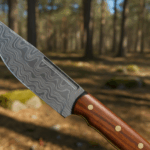
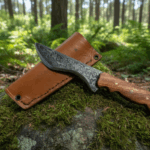
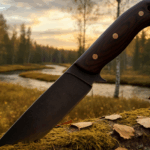
Fire changes steel, but it is the craft behind the flame that decides whether a blade lives up to its promise. At JWBS Knives in Hendersonville, Tennessee, every blade is born from disciplined heat, controlled timing, and the patient eye of a veteran craftsman. Heat treatment is the silent step that turns a good piece of steel into a great one, and it is why our custom knives earn their reputation for toughness, edge holding, and reliability.
Heat treatment has three core stages. First comes the critical heating phase, when steel is brought to a temperature that transforms its internal structure. In simple terms, the iron and carbon rearrange, preparing the blade for hardening. This is not guesswork. Steel type, blade thickness, and intended use all matter, especially when we are working with high carbon steel or pattern welded Damascus steel. A kitchen slicer, a field knife, and a camp chopper do not want the same final hardness, so the recipe changes.
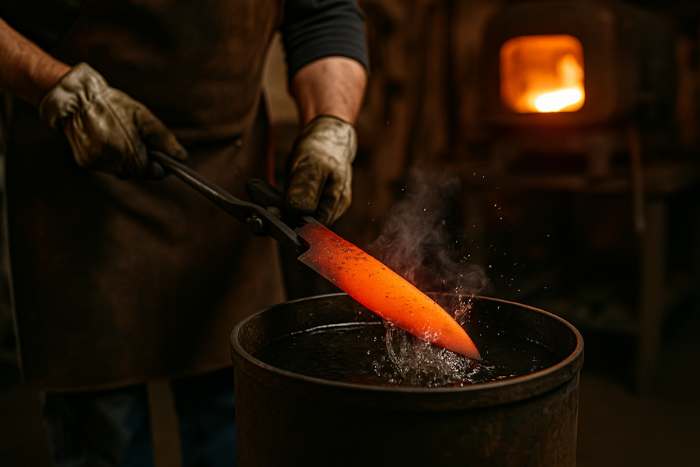
Next comes quenching, the dramatic moment when glowing steel meets oil, air, or another quench medium. Done right, the blade hardens throughout, setting the stage for strength and edge retention. Done poorly, the blade can crack or warp. Our veteran mindset helps here. In the military you learn to respect process, timing, and repeatability. That same discipline guides how we quench each forged knife so it emerges straight, hard, and ready for the final step.
After quench, the blade is very hard but also too brittle for real work. That is why tempering matters. We bring the blade back to a controlled temperature for a carefully measured time, trading a little hardness for a lot of toughness. Tempering is where the steel’s personality settles in. A hard-use outdoor blade gets a different temper than a fine slicer. We test and verify with Rockwell hardness checks, then prove it at the bench and in the field. Data matters, but performance under real use is the truth we care about.
Why does all this matter to you as a buyer? Because heat treatment is the backbone of durability. Geometry, grind, and finish all help, but heat treatment decides whether a blade rolls, chips, or keeps cutting. It is the reason our hand forged knives arrive with confident edges and stand up to daily work. It is also why we help customers choose the right steel for their purpose. Some steels respond best to oil quench, others like an air hardening schedule, and those choices change how the blade behaves.
Quality control is not a single checkpoint. Throughout the process we look for straightness, grain refinement, and reliable hardness across the edge. We normalize and stress-relieve to improve stability before the final quench. On blade heat treatment days, the shop feels like a mission: temperatures are logged, soak times are watched, and every blade is treated like it will be carried by someone who depends on it. That mindset comes from our roots. JWBS Knives is veteran-owned, founded by a former heavy weapons infantry soldier who learned long ago that careful prep and consistent execution win the day.
The results show up when you sharpen and when you use the blade. A properly treated knife maker blade takes a keen edge fast, holds it longer, and resists damage when you push it. When customers send feedback after months of field use, they talk about confidence. That is heat treatment doing its quiet job behind the scenes.
In the end, great blades are not an accident. They are forged with intent, hardened with precision, and tempered with patience. At JWBS Knives, heat treatment is not just a step. It is our standard. If you want a knife that carries real craft in its core, built to serve today and to be handed down tomorrow, the key is in the fire and in the discipline that surrounds it. That is the promise behind every JWBS blade.
📌 Contact Information
📍 Hendersonville, TN
📞 615-406-6370
🌐 Website
📰 News Blog
📘 Facebook
📸 Instagram